
About the Campaign
Veterinarians are Essential to Canada’s Health
Your family’s health, the food on your table, Canada’s wildlife and your pets are all connected by the work of veterinarians. Every day, veterinarians prevent disease, protect animal welfare, support farmers, safeguard our food supply, respond to public health threats and care for the animals that enrich our lives. Their work may happen behind the scenes, but its impact reaches us all.
Vet stories
Helping Animals. Helping People. Helping Her Community.
Dr. Dominique Charron
Visiting Scholar in One Health at the University of Guelph

Every year on November 3, One Health Day invites us to consider a simple but powerful idea: the health of people, animals and the environment is deeply interconnected.
- The air we breathe, the water we drink and the food we eat all depend on healthy, functioning ecosystems. Diseases can move between animals and people.
- Beyond agriculture, veterinarians play an essential role in protecting animal welfare and wellbeing.
- Veterinarians help monitor avian influenza, working with wildlife specialists, agricultural producers and government agencies to understand disease risks and prevent their spread.
- Veterinarians work alongside physicians, epidemiologists, ecologists, environmental scientists and many others.
A healthier future for animals, people and Canada.
Veterinarians play a vital role far beyond the exam room. From caring for animals and protecting animal welfare, to safeguarding our food supply and public health, their expertise touches all of us. CVMA is working to ensure veterinarians have the support, recognition and voice they need to meet the challenges of tomorrow.

BEYOND THE CLINIC
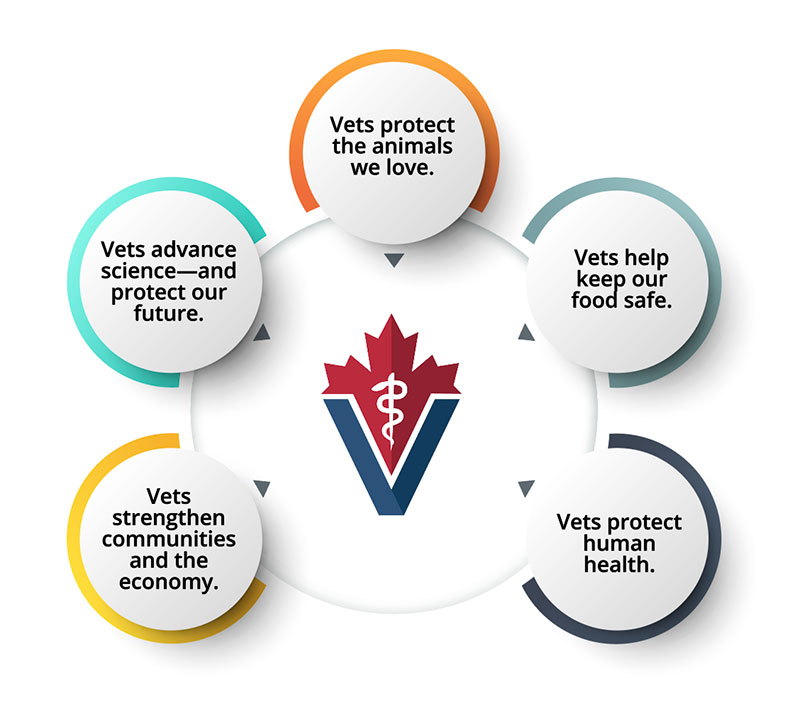
The Many Ways Vets Make a Difference
Wherever animal, human and environmental health intersect, veterinary expertise is at work.
NEWS HIGHLIGHT
NEWS HIGHLIGHT
The number of Canadian households owning cats or dogs rose from approximately 10.83 million in 2019 to 12.23 million in 2024.
That's an increase of roughly 1.4 million pet-owning households in five years, or about 13%.